Main Screen
Important
Check-list:
- Make sure that you have your Environment properly configured.
- That your Virtual Machine is up and ready.
- That the Python environment is set.
- That all three IOCs are running.
This will be the main piece of our Beam Positioning application and will group the other components of this tutorial.
The finished result will look like this:
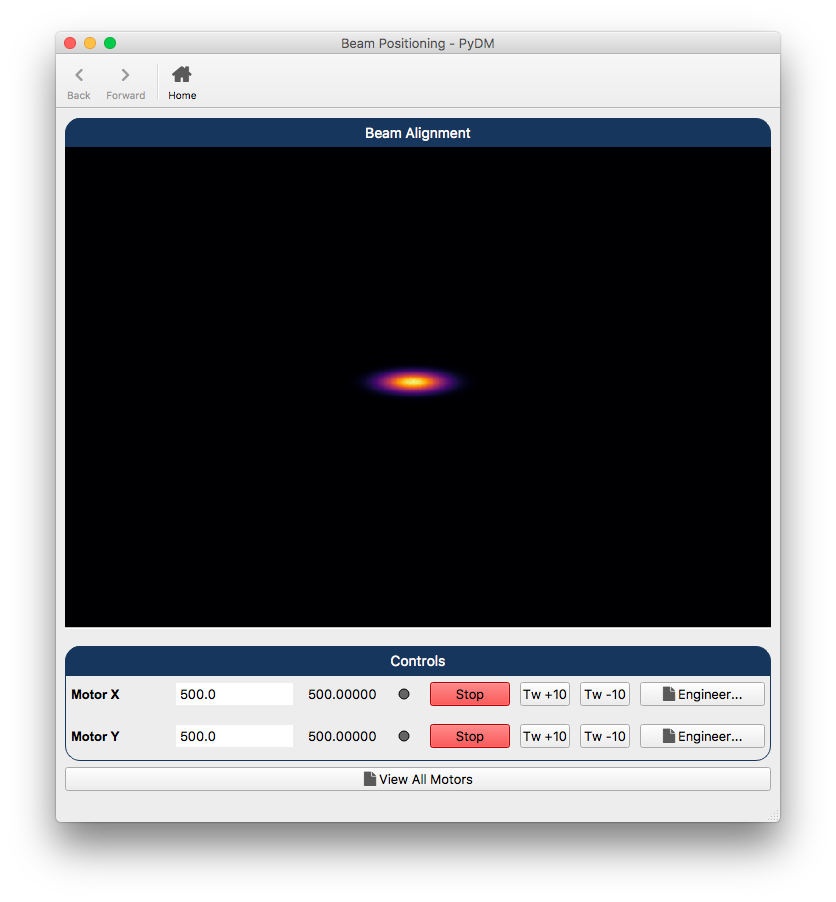
Main Screen for Beam Positioning Application
Step 1.
Let’s start by opening the Qt Designer and creating a new
Widget.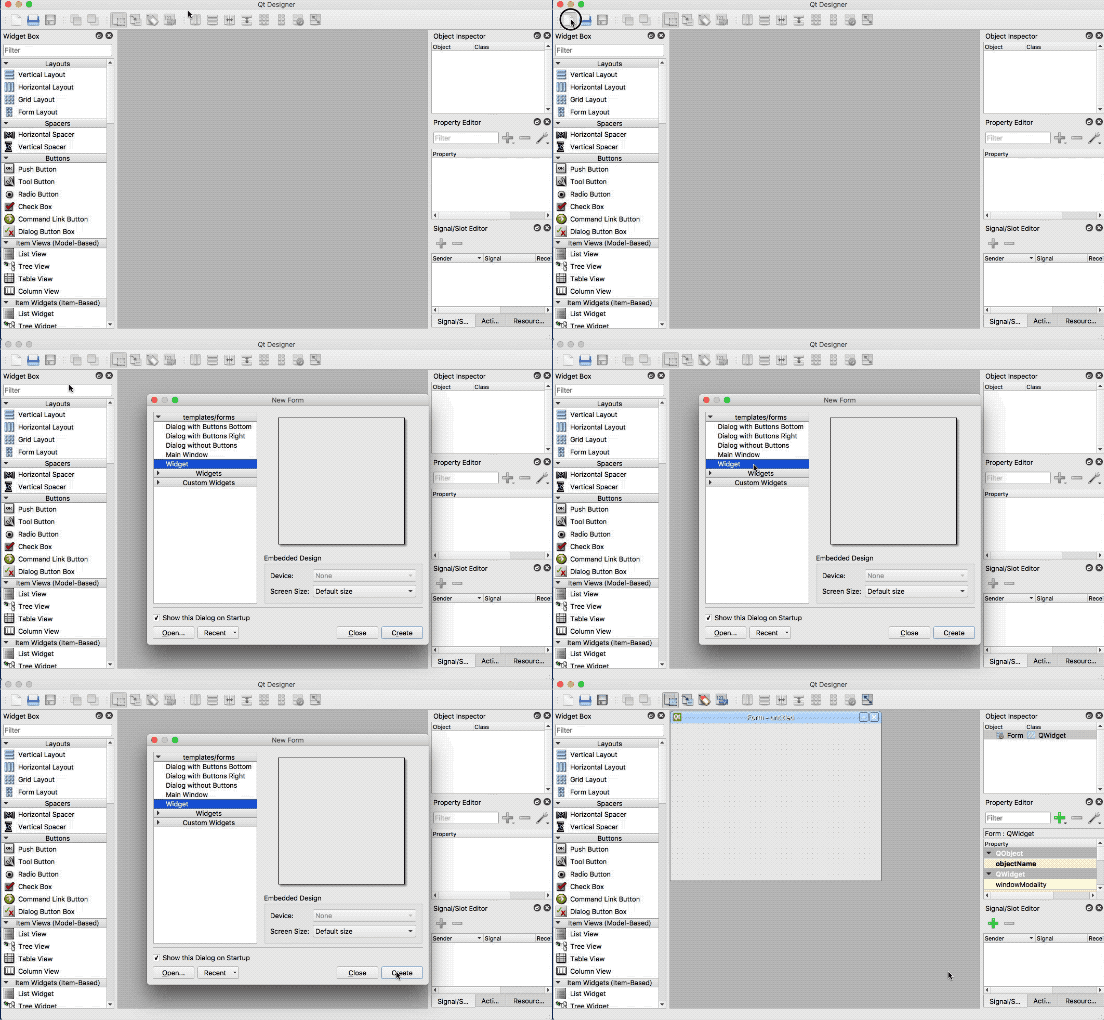
Step 2.
With the new form available, let’s add a
QVBoxLayoutwidget and make it fill the whole form. Let’s selectLayout Verticallyfor the Form.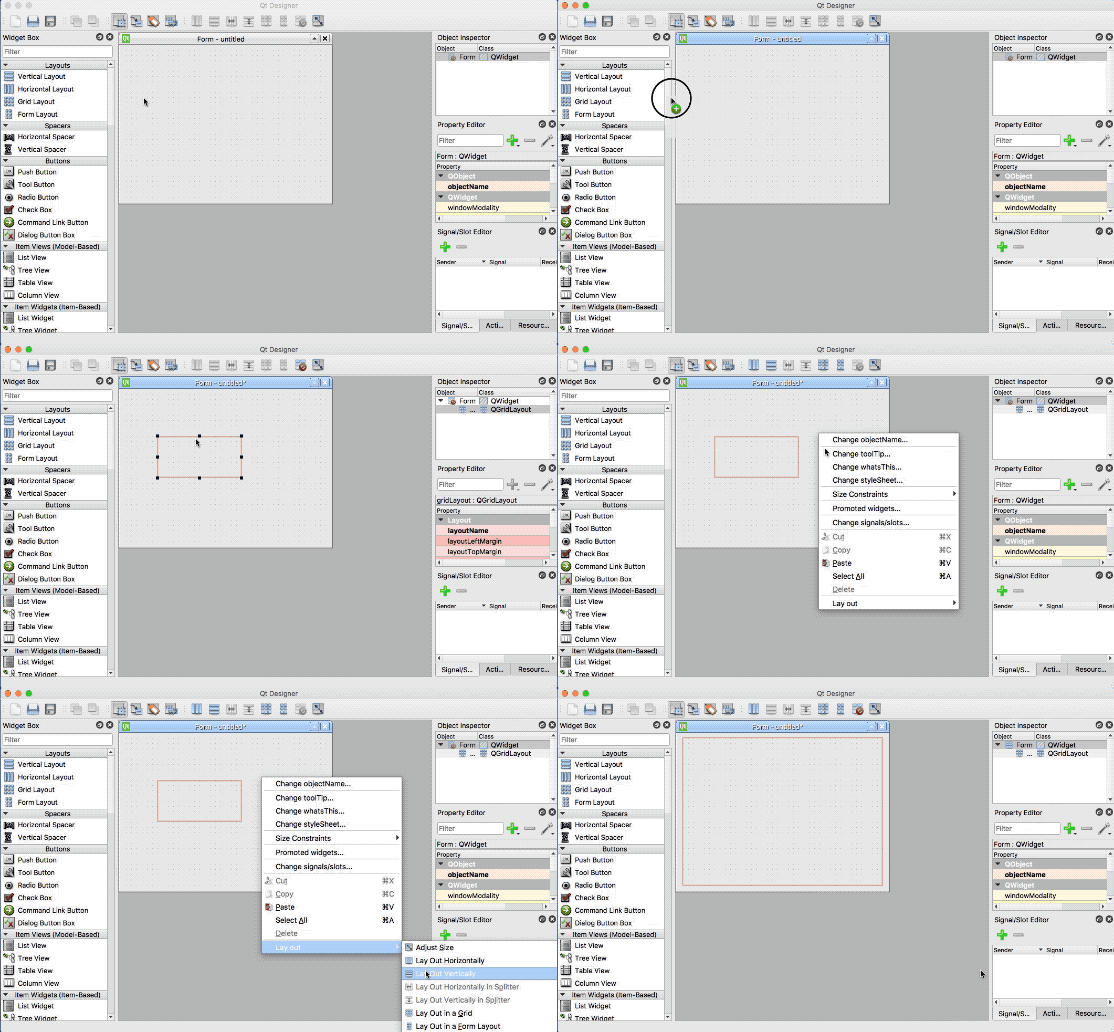
Step 3.
Now that we have a layout, let’s take a look at the widgets on this screen:
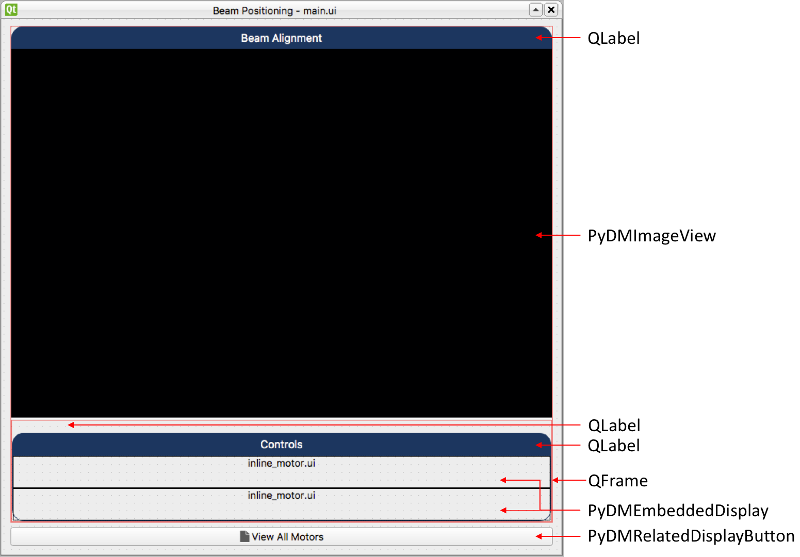
Step 3.1.
The first
QLabelwill be the title of our screen:Drag and drop a
QLabelinto the previously addedQVBoxLayout.Set the
textproperty of this label to:Beam Alignment.In order to make the label look better as a title, add the following to the
stylesheetproperty:QLabel { qproperty-alignment: AlignCenter; border: 1px solid #FF17365D; border-top-left-radius: 15px; border-top-right-radius: 15px; background-color: #FF17365D; padding: 5px 0px; color: rgb(255, 255, 255); max-height: 25px; font-size: 14px; }
Step 3.2.
The second widget that we will add is a
PyDMImageView, which will display the image coming from our camera:- Drag and drop a
PyDMImageViewinto the previously addedQVBoxLayoutunder theQLabelthat was added at Step 3.1. - Set the
imageChannelproperty toca://13SIM1:image1:ArrayData. - Set the
widthChannelproperty toca://13SIM1:image1:ArraySize1_RBV. - Set the
readingOrderproperty toClike. - Set the
maxRedrawRateproperty to30so we can update the image at 30 Hz.
- Drag and drop a
Step 3.3.
The third widget that we will add is a
QVBoxLayout, which will be the placeholder for the controls area of the screen:- Drag and drop a
QVBoxLayoutinto the previously addedQVBoxLayoutunder thePyDMImageViewthat was added at Step 3.2.
- Drag and drop a
Step 3.4.
The fourth widget that we will add is a
QLabel, which will be updated with the result of the calculation of beam position in the next section (Adding Code into the Main Display):Drag and drop a
QVBoxLayoutinto theQVBoxLayoutthat was added in Step 3.3.Set the
objectNameproperty of this widget tolbl_blobs.Important
It is very important to set the
objectNameproperty of widgets in the designer if you intend to access them using code, otherwise the names will be automatically assigned, and will not make much sense later on.Set the
textproperty to empty so this label will only show information when we write to it using the code later on.
Step 3.5.
The fifth widget that we will add is a
QLabel, which will be updated with the result of the calculation of beam position in the next section (Adding Code into the Main Display):Drag and drop a
QVBoxLayoutinto theQVBoxLayoutthat was added in Step 3.3.Set the
objectNameproperty of this widget tolbl_blobs.Important
It is very important to set the
objectNameproperty of widgets in the designer if you intend to access them using code, otherwise the names will be automatically assigned, and will not make much sense later on.Set the
textproperty to empty so this label will only show information when we write to it using the code later on.
Step 3.6.
The sixth widget that we will add is another
QLabel, which will show the title of our controls area:Drag and drop a
QLabelinto theQVBoxLayoutthat was added in Step 3.3 right under the QLabel added in Step 3.5.Set the
textproperty of this label to:Controls.In order to make the label look better as a title, add the following to the
stylesheetproperty:QLabel { qproperty-alignment: AlignCenter; border: 1px solid #FF17365D; border-top-left-radius: 15px; border-top-right-radius: 15px; background-color: #FF17365D; padding: 5px 0px; color: rgb(255, 255, 255); max-height: 25px; font-size: 14px; }
Step 3.7.
The seventh widget that we will add is a
QFrame, which will be the container for our two motors’Embedded Displays:Drag and drop a
QFrameunder the QLabel added in Step 3.6.Set the
frameShapeproperty toStyledPanel.Set the
frameShadowproperty toRaisedSet the
stylesheetproperty to:QFrame#frame{ border: 1px solid #FF17365D; border-bottom-left-radius: 15px; border-bottom-right-radius: 15px; }
Step 3.8.
The eight widget that we will add is a
PyDMEmbeddedDisplay, which will display theinline_motor.uiwith information for our first motor axis:- Drag and drop a
PyDMEmbeddedDisplayinto theQFrameadded in Step 3.7. - Right-click the
QFramefrom Step 3.7 and selectLayout >> Layout Vertically. - Set the
macrosproperty to{"MOTOR":"IOC:m1"}. - Set the
filenameproperty toinline_motor.ui.
- Drag and drop a
Step 3.9.
The ninth widget that we will add is a
PyDMEmbeddedDisplay, which will display theinline_motor.uiwith information for our second motor axis:- Drag and drop a
PyDMEmbeddedDisplayinto theQFrameadded in Step 3.7. - Set the
macrosproperty to{"MOTOR":"IOC:m2"}. - Set the
filenameproperty toinline_motor.ui.
- Drag and drop a
Step 3.10.
Finally, the tenth widget that we will add is a
PyDMRelatedDisplayButton, which will open theAll Motorsscreen that will be developed later:- Drag and drop a
PyDMRelatedDisplayButtoninto theQVBoxLayoutadded in Step 2. - Set the
displayFilenameproperty toall_motors.py. - Uncheck the
openInNewWindowproperty.
- Drag and drop a
Step 3.11.
Once all the widgets are added to the form, it is now time to adjust the layouts and make sure that all is well positioned and behaving nicely.
Using the
Object Inspectorat the top-right corner of the Qt Designer window, select theframeobject and set the properties according to the table below:Property Value layoutLeftMargin 0 layoutTopMargin 0 layoutRightMargin 0 layoutBottomMargin 0 layoutSpacing 0 Continuing with the
Object Inspector, select thevertical layoutobject right before theframeand set the properties according to the table below:Property Value layoutSpacing 0 Still with the
Object Inspector, now select the top mostverticalLayoutobject set the properties according to the table below:Property Value layoutSpacing 0
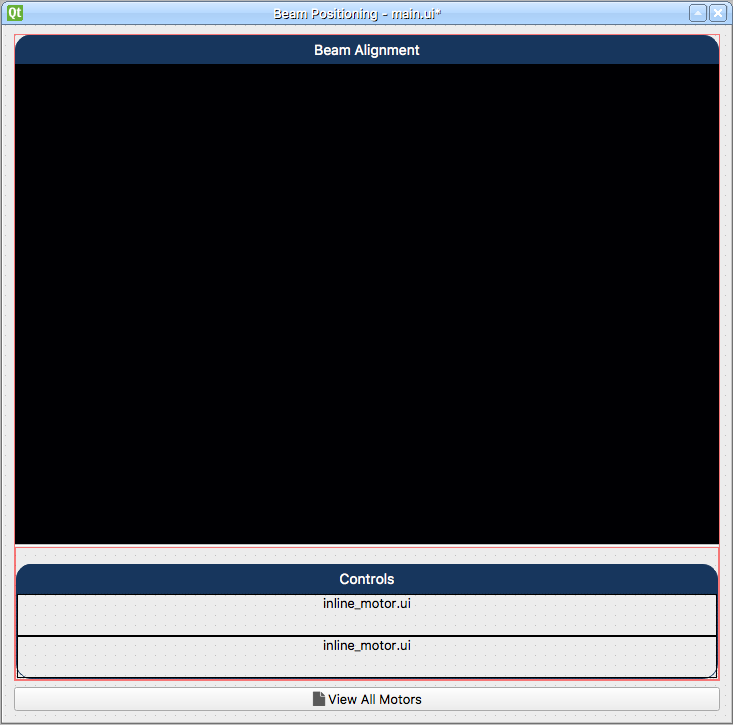
The end result will be something like this:
Step 4.
Save this file as
main.ui.Warning
For this tutorial it is important to use this file name, as it will be referenced at the other sections. If you change it please remember to also change at the next steps when referenced.
Step 5.
Test the Expert Motor Screen:
pydm main.ui
Note
You can download this file using this link.